Webinar: New Approach in Mass Metrology. Overview of RADWAG Manual, Automatic and Robotic Mass Comparators
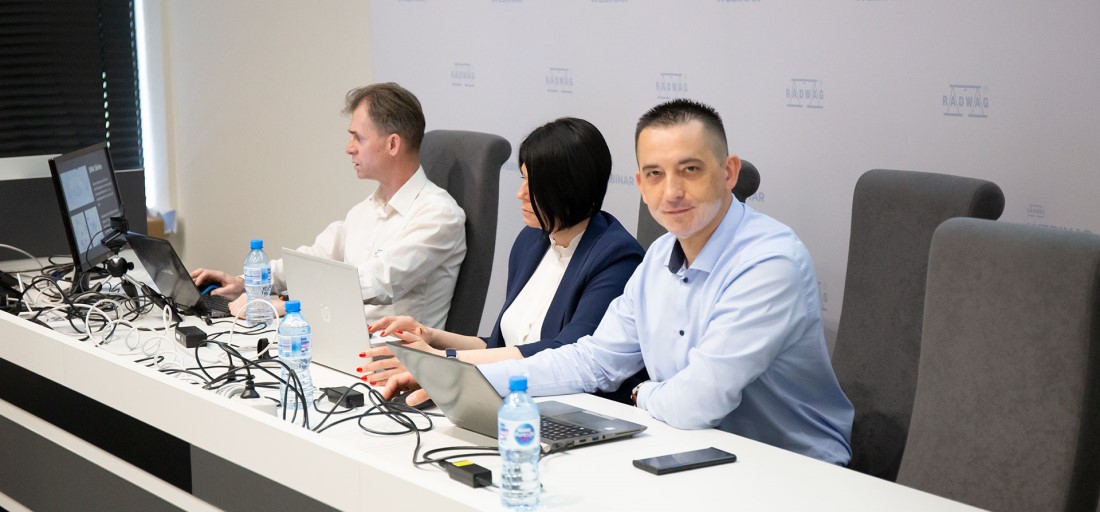
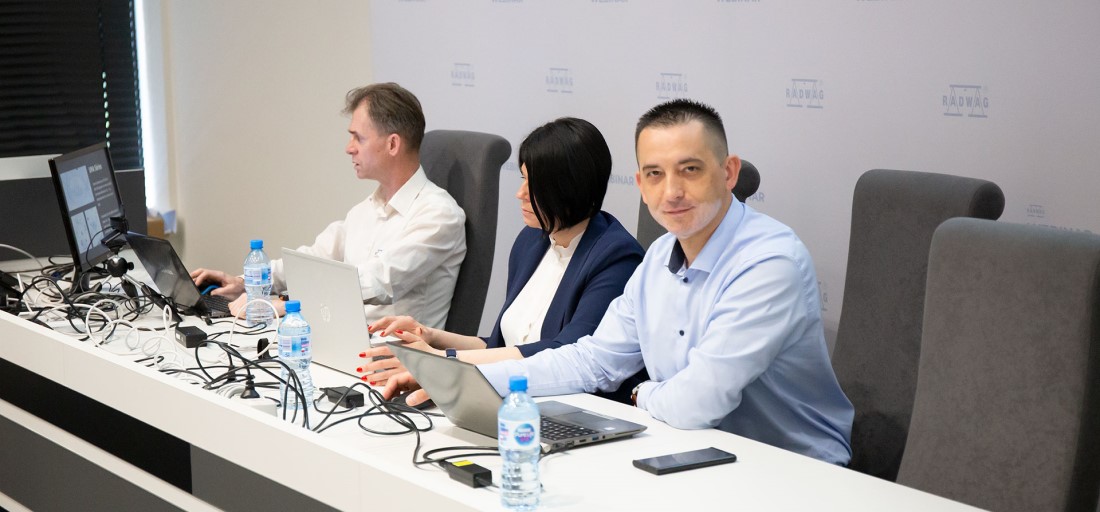
On 18th May 2021, a webinar titled "New Approach in Mass Comparators. The Latest Products for Mass Metrology” took place. Which new RADWAG products for comparison were presented during the webinar? Which mass comparators are widely used in mass metrology: manual or automatic?
"New Approach in Mass Comparators. The Latest Products for Mass Metrology” – the Webinar Programme
The training was intended for representatives of measurement authorities and distributors operating in the territory of French-speaking Africa, it was held in French. The webinar’s goal was to make the participants familiar with RADWAG solutions intended for mass comparison, and discuss the differences between manual and automatic devices.
The meeting started with an overview of RADWAG product range. Mariusz Danasiewicz, the Africa Sales Manager, presented manual, automatic and robotic mass comparators first, next he focused on exemplary installations based on Radwag devices intended for comparison. Later, the presenter compared manual and automatic mass comparators and informed which are more widely used in mass metrology. Finally, he provided the attendees with answers during the „Q&A” panel.
Overview of RADWAG Manual, Automatic and Robotic Mass Comparators
1. Manual Mass Comparators
During the webinar the following series of manual mass comparators were discussed: UYA.4Y.KO, XA.4Y.A.KO, WAY.4Y.KO, APP.4Y.KO, HRP.4Y.KO, PM.4Y.KB and HRP.4Y.KB.
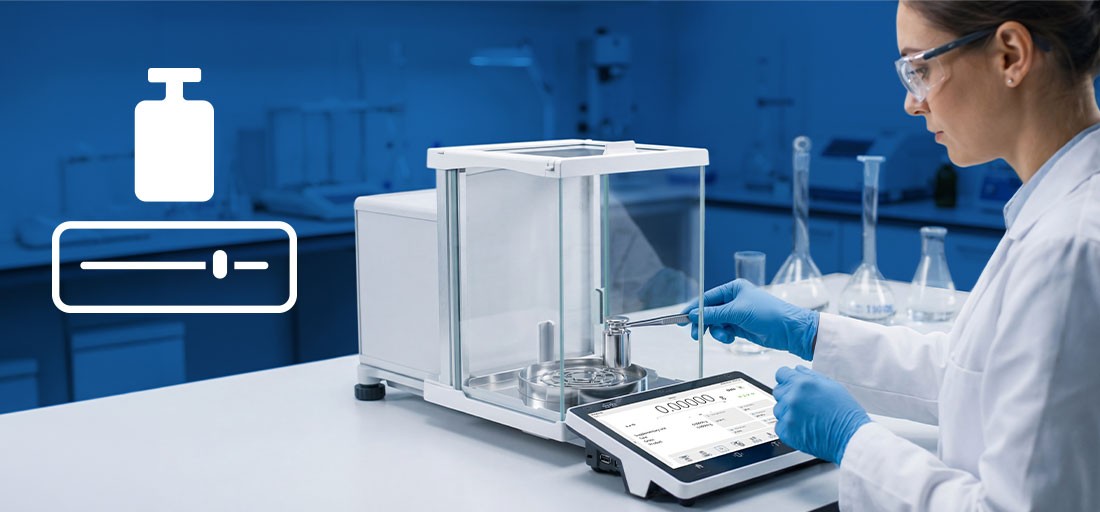
The manual mass comparators enable calibration of the biggest mass standards, reaching even few thousand kilograms.
2. Automatic Mass Comparators
The mass comparators of UMA series are the most professional automatic machines. They enable comparison of 1 mg - 1 000 g mass standards of class E1 and lower.
While discussing the series, the following mass comparators were presented: UMA 5, UMA 100 and UMA 1000, they differ one from another by range, repeatability and readability.
AVK-1000 mass comparator features a vacuum chamber with the resolution of 10 billion units which eliminates human error and other potential external factors influencing the measurement accuracy.
The AVK-1000 offers repeatability of 0.3 µg, readability of 0.1 µg and maximum capacity of 1 000 g.
AGV-8/1000 mass comparator is intended for determination of density and volume of class E1 mass standards, and lower, in accordance with the OIML R111. It is characterized by measurement stability within 1 g and 1 kg range and readability of d = 0.01 mg.
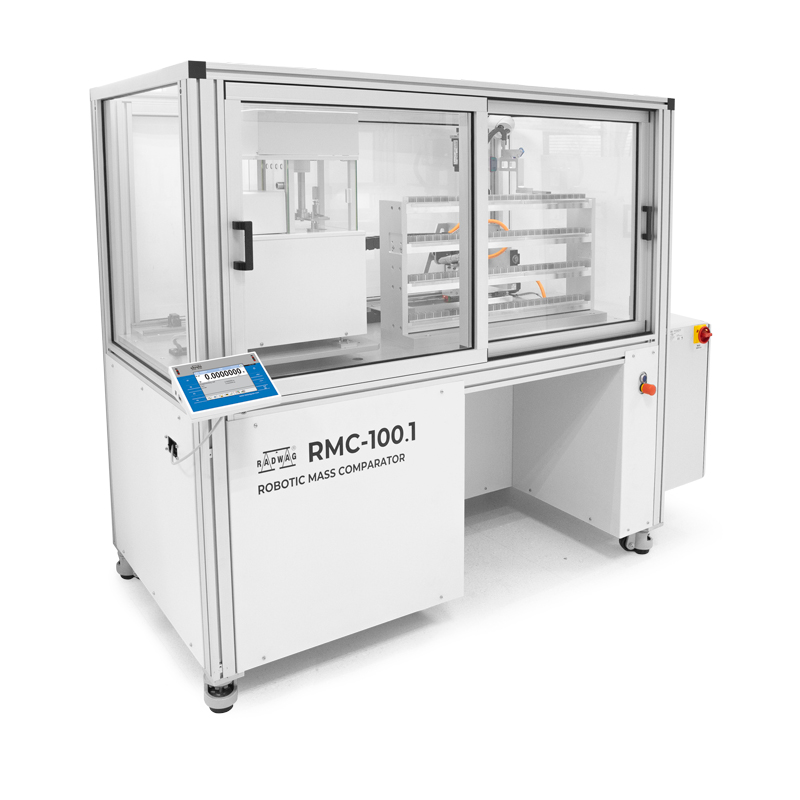
3. RMC Robotic Mass Comparators
The new series of RMC robotic mass comparators ensures repeatability of measurements within 1 mg to 1 kg range with the readability of 0.1 µg.
While discussing the series, the following mass comparators were presented: RMC 5, RMC 100, RMC 100.1 and RMC 1000, they differ one from another by the maximum capacity, readability, repeatability and weighing pan dimensions.
Additionally, the SM susceptometer for magnetism measurement was presented. The device is designed to measure, with the highest accuracy and in accordance with OIML R111 standard, the magnetic susceptibility and permanent magnetisation of weights of class E1 and lower. The modular design enables use of the susceptometer, after disassembly of a respective module, as an ultra-microbalance, microbalance or a manual mass comparator, depending on the model.
Supplementary Mass Comparison Accessories and Comprehensive Services
-
THB-R system, designed to ensure monitoring of ambient conditions,
-
THBR 2.0 ambient conditions recorder,
-
Radwag Cloud software offering record and preview of measurement results from few sensors concurrently thanks to the THBR 2.0,
-
THB.L vibration analyzer of 0.1 μg resolution and the frequency range from 0.01 Hz to 3 Hz,
-
RMCS software intended for management of the whole adjustment and test process,
and comprehensive services such as:
-
complex analysis of ambient conditions in the laboratory (temperature, humidity, pressure, air density, vibrations and magnetism),
-
consulting services regarding air conditioning systems and ventilation,
-
installation of mass comparators and certified training in mass comparator use,
-
calibration and validation of mass comparators,
-
periodical audits and checks of mass comparators.
Manual Mass Comparators Vs Automatic Ones
During the webinar, manual and automatic mass comparators were compared. The analysis lead to the following conclusions:
-
repeatability in the case of automatic mass comparators is smaller than in the case of manual ones, this means greater accuracy of automatic devices;
-
due to automation of mass standard calibration process the uncertainty with use of automatic mass comparators is lower than in the case of manual mass comparators;
-
use of automatic mass comparators eliminates errors being a result of so called human factor, since:
-
each time the manual mass comparator door opens, the conditions inside the weighing chamber change, this affects mass measurement (automatic mass comparator door remain closed whenever an object is compared - few mass standards are loaded onto the pan, the machine compares them by itself),
-
it allows to get rid of an eccentricity error (automatic mass comparators will always deposit the load in the same spot of the weighing pan - contrary to a human);
-
use of automatic mass comparators employs smaller workforce, this in turn saves time and money (the machine compares the mass standards automatically, which in the case of manual mass comparators would have to be handled by a human on an ongoing basis);
-
thanks to RMCS software the comparison process can be set so that the mass standards are automatically compared preferably during a work break, the user will receive information about completed comparison process.
To sum up, automatic mass comparators are more widely used in metrology than the manual ones.
"New Approach in Mass Metrology. The Latest Products for Mass Metrology” - Webinar Summary
The webinar was attended by more than 50 people, among them representatives from dozens of measurement offices in Africa. We would like to thank all the participants for their presence, and invite for our next webinars.
Feel like asking a question regarding either the webinar or a mass comparator? Contact our expert.