Radwag Balances and Scales - Advanced Weighing Technologies
2022-07-19

What Does a Laboratory Product Manager Do at RADWAG?

What Does a Laboratory Product Manager Do at RADWAG?

What Does a Laboratory Product Manager Do at RADWAG?
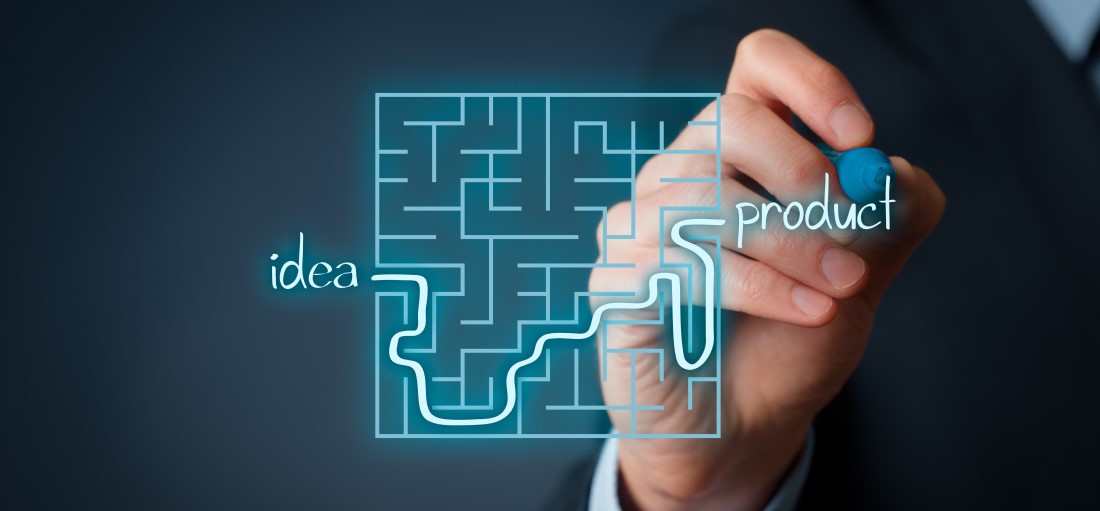
A laboratory product manager can be compared to a parent who treats a brand’s product as if it were his or her own child: he or she participates in the process of planning its birth, accompanies it at birth, watches with pride as it crawls and – sometimes with a wobbly, other times with a confident step – enters the market. RADWAG’s youngest child is the ELLIPSIS series of laboratory balances.


Market Research, Concept Development and Implementation

A laboratory product manager at RADWAG does just that - manages the process of creating a product dedicated to the laboratory environment. The new product must meet customers’ expectations, satisfy their needs and be competitive at the same time. At the same time, the manager undertakes appropriate marketing activities, including developing a strategy for the product’s introduction to the market and a strategy for its sales and promotion, as well as constantly taking care of the product’s image.

What Does a Laboratory Product Manager Do at RADWAG?

Bringing a product to life and watching it grow from a seed of a concept to an internationally competitive product is extremely interesting. So is monitoring market mechanisms, that is, following the processes that are currently taking place in the market, studying their causes and predicting their directions. This is the best way to learn about consumer preferences and the actions of competitors, and thus gain a broader perspective.


Presenting the Finished Product to the World

Add to all this the privilege of traveling. We exhibit our products at international domestic and international trade fairs, such as “ArabLab” in Dubai – an annual industry event aimed at representatives of the laboratory and research segment.

Read more about the fairs we participate in.

In addition to participating in the trade fair, the purpose of our trips is to install and commission RADWAG production equipment at the customer’s site, and to carry out weighing procedures and processes, such as calibration, and training in the operation of these devices.

The work of a product manager is responsible and demanding, by its diversity – extremely interesting, and at the same time gives great satisfaction. Just like the role of a parent.


Do you want to know what the work of other specialists employed by our company consists of?

This is how the Head of the Engineering Department works.

This is how the Head of the Engineering Department of Electronics works.

This is how an Analytical Balances Assembler works.

This is how an IT Engineer, Software Specialist works.

This is how a Graphic & Motion Designer works.


How about you? Would you like to work for us?

Here’s who we’re looking for. 

Newsletter

Subscribe to the newsletter if you would like to receive RADWAG news.

View more
Polish Quality on a Global Scale. Discover RADWAG
2026-09-09
2 min read

Polish Quality on a Global Scale. Discover RADWAG

Hundreds of carefully considered decisions, in-house production and attention to detail – discover what lies behind the quality of our products.
More  ➜
Is It Possible to Weigh Something You Cannot Touch? On the Unusual Uses of Laboratory Balances
2026-08-25
5 min read

Is It Possible to Weigh Something You Cannot Touch? On the Unusual Uses of Laboratory Balances

When we think of weighing, we usually picture a simple process: we place an object on a weighing pan and read its mass. In reality, modern metrology goes far beyond this scenario.
More  ➜
The Use of Analytical Balances. Why Is Measurement Accuracy so Important?
2026-08-11
4 min read

The Use of Analytical Balances. Why Is Measurement Accuracy so Important?

In laboratories, every fraction of a gram can affect the final test result. That is why analytical balances are among the most important measuring instruments used in research, industrial, pharmaceutical and university laboratories.
More  ➜
Is Mass a Constant? Factors Affecting the Measurement Result
2026-07-28
4 min read

Is Mass a Constant? Factors Affecting the Measurement Result

At first glance, the answer seems obvious. If an object has a mass of 100 grams, it should always weigh 100 grams. However, in metrological practice, the situation is much more complex.
More  ➜
Electrostatics – the Silent Precision Killer
2026-07-14
4 min read

Electrostatics – the Silent Precision Killer

On the one hand, accurate balance, controlled conditions and an experienced operator; on the other, inconsistent results. One of the most commonly overlooked culprits is electrostatic charge – a phenomenon which is exceptionally effective at interfering with mass measurements.
More  ➜
Analytical vs. Precision Balances – When Are You Paying too Much, and When Are You Taking a Risk?
2026-06-30
5 min read

Analytical vs. Precision Balances – When Are You Paying too Much, and When Are You Taking a Risk?

Choosing the right laboratory balance often seems straightforward – until the moment you have to make a purchase decision.
More  ➜
How Often Should a Balance Be Calibrated in a Lab Environment?
2026-06-17
1 min read

How Often Should a Balance Be Calibrated in a Lab Environment?

Calibrating a laboratory balance is essential for obtaining reliable measurement results. Find out how often it should be done and in which situations it is absolutely essential.
More  ➜
What Is ‘Calibration’ and How Does It Differ From Adjustment?
2026-05-26
3 min read

What Is ‘Calibration’ and How Does It Differ From Adjustment?

‘Calibration’ is a term historically associated with the balance adjustment process. Adjustment, on the other hand, is a set of activities through which a measuring instrument is made to operate in accordance with its intended use.
More  ➜
Effective Laboratory Management. How Does Process Automation Improve Efficiency?
2026-05-12
5 min read

Effective Laboratory Management. How Does Process Automation Improve Efficiency?

The growing number of tests, the need to maintain the highest quality of results, and the limited availability of qualified staff mean that laboratory management today requires not only organisational skills but also the informed use of modern technologies.
More  ➜
Moisture Analyzer as a Quality Control Tool in Plastics Production – Accuracy and Effectiveness of RADWAG Technology
2026-04-28
3 min read

Moisture Analyzer as a Quality Control Tool in Plastics Production – Accuracy and Effectiveness of RADWAG Technology

In modern plastics production, precise control of granule moisture content determines the stability of the technological process, the strength of parts and the minimisation of material losses. Read how RADWAG’s technological solutions allow your company to achieve full repeatability and process safety.
More  ➜
How Much Does a Lab Technician’s Time Cost You? The Hidden Costs of Manual Calibration
2026-04-14
4 min read

How Much Does a Lab Technician’s Time Cost You? The Hidden Costs of Manual Calibration

Although manual pipette calibration is still widely used, it significantly increases working time and generates hidden costs which often go unnoticed in day-to-day laboratory operations. Fortunately, there are modern solutions available which can boost laboratory productivity.
More  ➜
Pallet Scale vs. Beam Scale – a Complete Guide to Industrial Scales
2026-03-31
5 min read

Pallet Scale vs. Beam Scale – a Complete Guide to Industrial Scales

How does a U-type pallet scale differ from a beam scale? Are beam scales suitable for weighing machines and tanks? Why is it worth buying a pallet scale directly from the manufacturer? You will find answers to these and other questions in this article.
More  ➜
What Does ‘Precision Balances’ Mean?
2026-03-17
2 min read

What Does ‘Precision Balances’ Mean?

Are precision balances inherently more precise than other balances? After all, the range of electronic balances includes laboratory balances, which are even more accurate, so where does this name come from?
More  ➜
« Back

© 2026 RADWAG Balances and Scales.

All rights reserved.