Radwag Balances and Scales - Advanced Weighing Technologies
2025-05-06

MYA 5.5Y.F1 Microbalance and Study on the Effect of Filter Cutting on Particulate Matter (PM) Analysis Accuracy

MYA 5.5Y.F1 Microbalance and Study on the Effect of Filter Cutting on Particulate Matter (PM) Analysis Accuracy

MYA 5.5Y.F1 Microbalance and Study on the Effect of Filter Cutting on Particulate Matter (PM) Analysis Accuracy
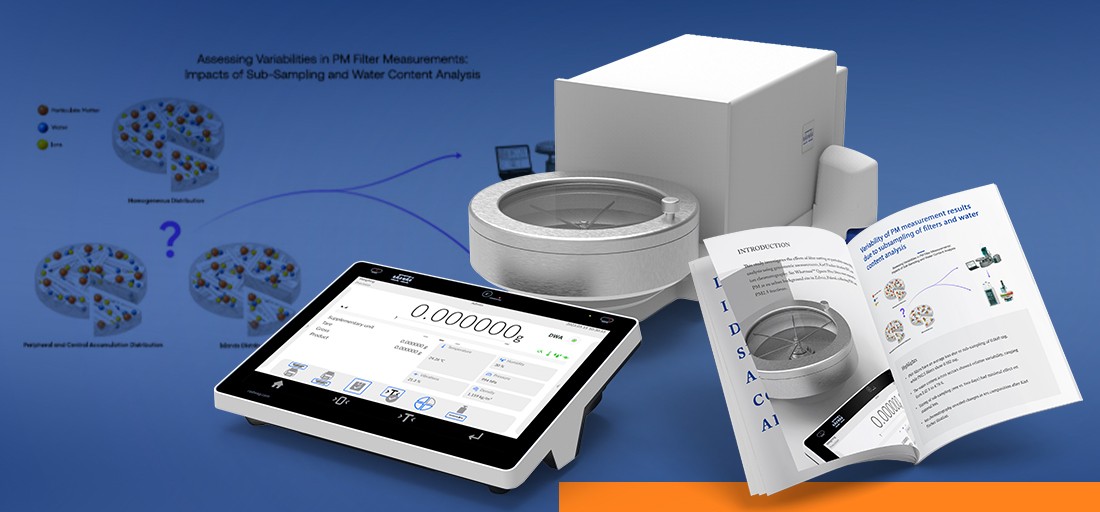
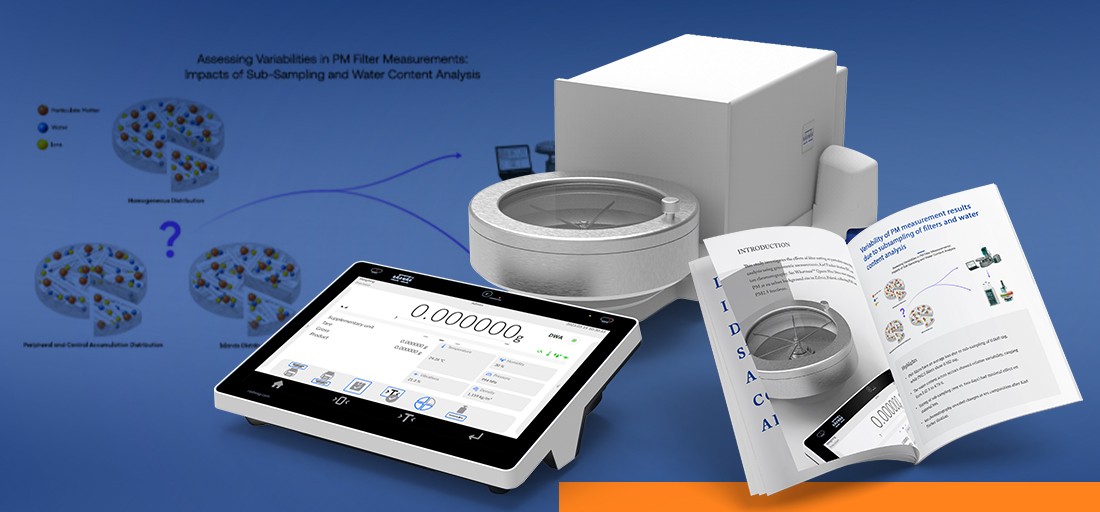
Researchers at the Institute of Fundamentals of Environmental Engineering of the Polish Academy of Sciences in Zabrze conducted a study on the effect of filter cutting on the accuracy of particulate matter (PM) analysis. They used advanced measurement techniques, including gravimetric weighing, Karl Fischer (KF) titration and ion chromatography. One of the key tools used in the study was the MYA 5.5Y.F1 Microbalance, which provides extremely accurate mass measurements of even the smallest samples.

Purpose of the Study

The aim of the study was to determine to what extent filter cutting affects the accuracy of PM analysis and thus the reliability of measurement results. Samples were taken at an urban background pollution site in Zabrze, collecting PM1 and PM2.5 fractions. After exposure, the filters were weighed under controlled conditions and further analysed.

Results and Key Findings

The use of the MYA 5.5Y.F1 Microbalance made it possible to accurately determine the mass loss resulting from filter cutting. It turned out that this process leads to significant material losses:

  • For PM1 filters, the average loss was 0.060 ± 0.073 mg, corresponding to a loss of approximately 3.34-3.54% of the deposited dust mass
  • For PM2.5 filters, the loss was higher, reaching 0.192 ± 0.142 mg, corresponding to a loss of 5.96-9.65%.

In addition, analysis of the variation in the water content of the samples showed that it is the moisture content that has a greater influence on the accuracy of the measurements than the filter cut itself.

Significance of the Results

The study showed that filter cutting can lead to significant material loss, which in turn can affect the accuracy of the particulate mass assessment. This is why it is so important to use top-of-the-range measuring equipment that allows precise analysis of even minimal mass differences. The MYA 5.5Y.F1 Microbalance proved to be an indispensable tool, as it enabled a reliable assessment of mass loss during the analysis of environmental samples.

The results of this study represent an important step towards improving both PM analysis methods and filter cutting procedures in order to minimise measurement errors.

The article, co-authored by: Dmytro Chyzhykov, Kamila Widziewicz-Rzońca and Barbara Mathews was published in “Chemosphere”, Volume 374, April 2025, 144177, and can be read in full here >>

Newsletter

Subscribe to the newsletter if you would like to receive RADWAG news.

View more
Polish Quality on a Global Scale. Discover RADWAG
2026-09-09
2 min read

Polish Quality on a Global Scale. Discover RADWAG

Hundreds of carefully considered decisions, in-house production and attention to detail – discover what lies behind the quality of our products.
More  ➜
Is It Possible to Weigh Something You Cannot Touch? On the Unusual Uses of Laboratory Balances
2026-08-25
5 min read

Is It Possible to Weigh Something You Cannot Touch? On the Unusual Uses of Laboratory Balances

When we think of weighing, we usually picture a simple process: we place an object on a weighing pan and read its mass. In reality, modern metrology goes far beyond this scenario.
More  ➜
The Use of Analytical Balances. Why Is Measurement Accuracy so Important?
2026-08-11
4 min read

The Use of Analytical Balances. Why Is Measurement Accuracy so Important?

In laboratories, every fraction of a gram can affect the final test result. That is why analytical balances are among the most important measuring instruments used in research, industrial, pharmaceutical and university laboratories.
More  ➜
Is Mass a Constant? Factors Affecting the Measurement Result
2026-07-28
4 min read

Is Mass a Constant? Factors Affecting the Measurement Result

At first glance, the answer seems obvious. If an object has a mass of 100 grams, it should always weigh 100 grams. However, in metrological practice, the situation is much more complex.
More  ➜
Electrostatics – the Silent Precision Killer
2026-07-14
4 min read

Electrostatics – the Silent Precision Killer

On the one hand, accurate balance, controlled conditions and an experienced operator; on the other, inconsistent results. One of the most commonly overlooked culprits is electrostatic charge – a phenomenon which is exceptionally effective at interfering with mass measurements.
More  ➜
Analytical vs. Precision Balances – When Are You Paying too Much, and When Are You Taking a Risk?
2026-06-30
5 min read

Analytical vs. Precision Balances – When Are You Paying too Much, and When Are You Taking a Risk?

Choosing the right laboratory balance often seems straightforward – until the moment you have to make a purchase decision.
More  ➜
How Often Should a Balance Be Calibrated in a Lab Environment?
2026-06-17
1 min read

How Often Should a Balance Be Calibrated in a Lab Environment?

Calibrating a laboratory balance is essential for obtaining reliable measurement results. Find out how often it should be done and in which situations it is absolutely essential.
More  ➜
What Is ‘Calibration’ and How Does It Differ From Adjustment?
2026-05-26
3 min read

What Is ‘Calibration’ and How Does It Differ From Adjustment?

‘Calibration’ is a term historically associated with the balance adjustment process. Adjustment, on the other hand, is a set of activities through which a measuring instrument is made to operate in accordance with its intended use.
More  ➜
Effective Laboratory Management. How Does Process Automation Improve Efficiency?
2026-05-12
5 min read

Effective Laboratory Management. How Does Process Automation Improve Efficiency?

The growing number of tests, the need to maintain the highest quality of results, and the limited availability of qualified staff mean that laboratory management today requires not only organisational skills but also the informed use of modern technologies.
More  ➜
Moisture Analyzer as a Quality Control Tool in Plastics Production – Accuracy and Effectiveness of RADWAG Technology
2026-04-28
3 min read

Moisture Analyzer as a Quality Control Tool in Plastics Production – Accuracy and Effectiveness of RADWAG Technology

In modern plastics production, precise control of granule moisture content determines the stability of the technological process, the strength of parts and the minimisation of material losses. Read how RADWAG’s technological solutions allow your company to achieve full repeatability and process safety.
More  ➜
How Much Does a Lab Technician’s Time Cost You? The Hidden Costs of Manual Calibration
2026-04-14
4 min read

How Much Does a Lab Technician’s Time Cost You? The Hidden Costs of Manual Calibration

Although manual pipette calibration is still widely used, it significantly increases working time and generates hidden costs which often go unnoticed in day-to-day laboratory operations. Fortunately, there are modern solutions available which can boost laboratory productivity.
More  ➜
Pallet Scale vs. Beam Scale – a Complete Guide to Industrial Scales
2026-03-31
5 min read

Pallet Scale vs. Beam Scale – a Complete Guide to Industrial Scales

How does a U-type pallet scale differ from a beam scale? Are beam scales suitable for weighing machines and tanks? Why is it worth buying a pallet scale directly from the manufacturer? You will find answers to these and other questions in this article.
More  ➜
What Does ‘Precision Balances’ Mean?
2026-03-17
2 min read

What Does ‘Precision Balances’ Mean?

Are precision balances inherently more precise than other balances? After all, the range of electronic balances includes laboratory balances, which are even more accurate, so where does this name come from?
More  ➜
« Back

© 2026 RADWAG Balances and Scales.

All rights reserved.