How to Teach Accurate Weighing? Analytical and Precision Balances in University Laboratories


The university laboratory is a place where future chemists, biotechnologists, pharmacists and engineers learn basic laboratory skills. One of these is accurate weighing. Although this seems simple, in practice it is at the weighing stage that students make the most mistakes, which later affect the entire experiment – from unsuccessful titration to incorrect solution concentration values. Therefore, a well-thought-out method of teaching this skill, as well as equipping laboratories with reliable balances, are of great importance.
At RADWAG, we have been observing for years how important our devices are in educating future generations of specialists. In this article, we suggest how to effectively teach weighing and select the optimal balance for a teaching laboratory.
1. Why is learning to weigh accurately so important?
High measurement accuracy is the foundation of chemical analysis. In university laboratories, weighing errors lead to:
· Incorrect preparation of solutions
· Wrong stoichiometric calculations
· Non-reproducible experimental results
· Difficulties in further laboratory classes.
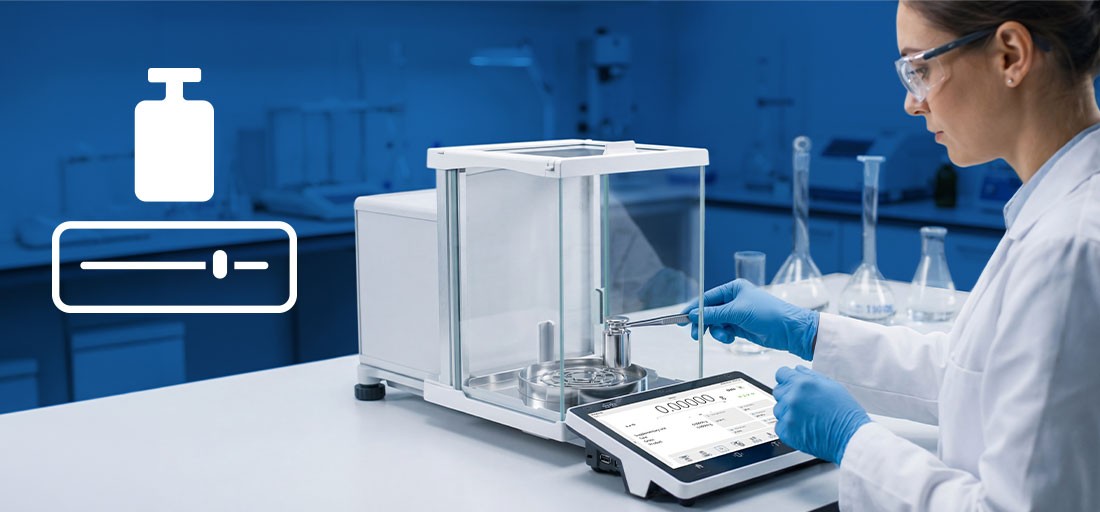
Students begin to understand the importance of precision only when they see how a minor oversight, such as touching a sample with their fingers or weighing a hot vessel, can distort the results. From a didactic perspective, a precision balance therefore becomes not only a measuring tool, but also an important element in teaching responsibility for the experiments carried out.
2. The most common mistakes students make when weighing
Thanks to years of cooperation with lecturers and laboratory staff, we have been able to identify a group of errors which recur in almost every laboratory:
a) Weighing warm samples or vessels
Even a slightly heated sample causes air to rise and appears to have a lower mass. This is one of the most common mistakes made by beginners.
b) Touching glass with bare hands
The grease and moisture on your fingers change the mass and destabilise the readings.
c) Incorrect use of tare
Sometimes students tare:
· After pouring in part of the sample
· Each time instead of working with the weighing vessel.
This leads to a lack of control over the actual amount of material being weighed.
d) The influence of draughts and air movement
Opening a window, quick hand movements or significant ventilation near the balance lead to fluctuations in the reading.
e) Lack of patience
Some students want to complete the task quickly, so they read the mass before the result has stabilised.
f) Errors resulting from lack of cleaning
Particles of substance, dust or liquid traces left on the weighing pan cause systematic errors. It is worth teaching not only the technique, but also understanding why attention to procedure has a real impact on measurements.
3. How to choose a balance for teaching purposes?
Laboratory equipment for students differs from research laboratory equipment. In teaching, apart from accuracy, the following factors are important:
a) Durability and resistance to intensive use
In a student laboratory, a balance can be used for several hours a day and operated by hundreds of people. For this reason, its design should be resistant to:
· Accidental movements
· Light impacts
· Frequent cleaning
· Spilled samples.
b) Ease of use
An intuitive interface and a limited number of functions in balances designed for teaching purposes help to avoid errors resulting from incorrect settings.
c) Stability of readings and short stabilisation time
With a large number of students in class, it is important that the device works quickly and reliably.
d) Learning support functions
For example:
· User guidance messages
· Unstable reading indication
· Ability to work with vessels, filters or pipettes
· Reports.
e) Appropriate accuracy class
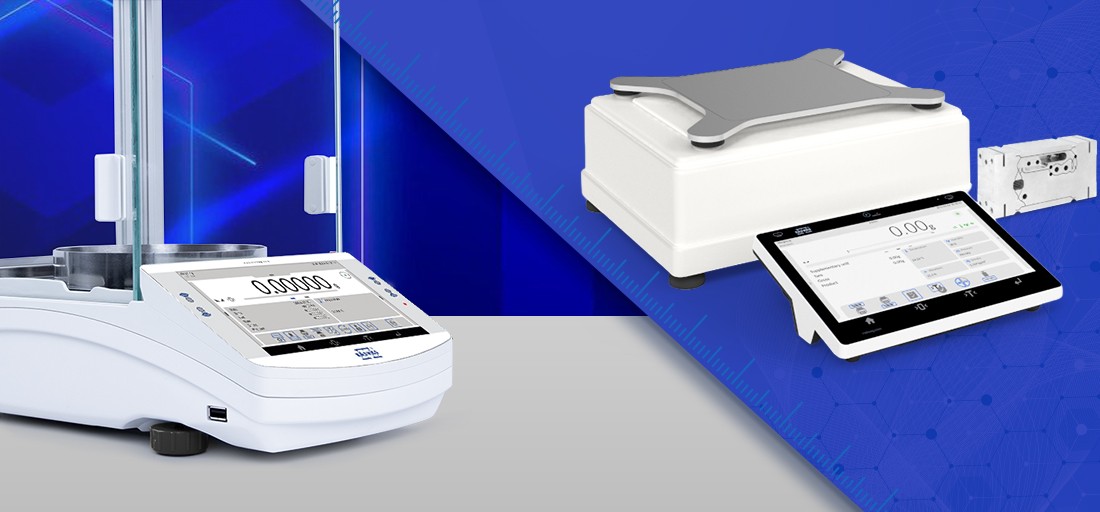
Not every laboratory needs an analytical accuracy of 0.002 mg. Sometimes precision balances with an accuracy of 1 mg or 10 mg are sufficient, especially in the first years of study. It is worth choosing a device which matches the level of advancement of the students.
4. RADWAG balances in teaching – examples of applications
Many university laboratories use balances which serve educational, demonstration and measurement purposes. In practice, this means that RADWAG balances are used, among other things, for:
· Exercises in preparing solutions
· Calibrating pipetting equipment
· Teaching precise dosing of substances
· Demonstrating physical phenomena (e.g. the effect of temperature or air movement on measurement stability)
· Demonstrating the operation of weighing chambers, filters or calibration procedures.
It is worth mentioning that universities often create demonstration kits, such as stations equipped with balances, sets of vessels, exercise materials and instructions. This allows lecturers to conduct classes more efficiently and students to master the basics of laboratory work more quickly.
5. Summary
Learning how to weigh accurately is one of the foundations of laboratory education. High-quality analytical balances and precision balances – durable, easy to use and resistant to errors made by novice users – significantly improve the quality of education. RADWAG has been supporting universities for years by supplying precision balances, while helping lecturers teach students how to work accurately in the laboratory.