Radwag Balances and Scales - Advanced Weighing Technologies
2026-02-17

How to Choose a Scale for Use in Harsh Industrial Environments?

How to Choose a Scale for Use in Harsh Industrial Environments?

How to Choose a Scale for Use in Harsh Industrial Environments?

In many industries, precise mass measurement must be performed in conditions far from laboratory conditions. Vibrations, fluctuating temperatures, high humidity and dust are everyday occurrences in production halls, warehouses, chemical plants and food processing facilities. To ensure reliable results and continuous operation, industrial scales must be selected for the environment in which they will be used.

What factors affect measurement in difficult conditions? What technical parameters should be taken into account? And which RADWAG solutions have been designed specifically for such applications?

Environmental Factors Affecting Measurement Accuracy

1. Vibrations and shocks

Vibrations generated by production machinery, conveyors or forklift movement can significantly interfere with the stability of the scale readings. In such conditions, the following are important:

·        Rapid measurement stabilisation

·        Advanced vibration filtration algorithms

·        Robust, rigid mechanical construction.

2. Temperature

Changes in ambient temperature and the temperature of the weighed goods can cause mechanical components to expand and affect strain gauge sensors. Industrial scales should feature:

·        Temperature compensation

·        Stable readings across a wide operating temperature range

·        Electronics resistant to thermal conditions.

3. Moisture and contact with liquids

High humidity, cleaning of workstations and accidental splashes are common occurrences in the food, pharmaceutical and chemical industries. Lack of adequate protection can lead to malfunctions or measurement errors.

4. Dust and contamination

Industrial dust (e.g. flour, cement, chemical powders) can get inside the device and cause mechanical and electronic damage. In such conditions, it is essential that the housing is sealed and that the scales are easy to keep clean.

Parameters Determining the Choice of Industrial Scales

1. IP protection rating

One of the most important parameters is the IP protection rating:

·        IP65 – protection against dust and water jets

·        IP67 – resistance to short-term immersion

·        IP68 – full protection during prolonged contact with water.

The more difficult the environmental conditions, the higher the degree of protection the weighing terminal and platform should have.

2. Stability and repeatability

In industrial conditions, it is not only accuracy that counts, but also the repeatability of results. The scale should quickly achieve a stable result, even on unstable ground or with variable loads.

3. Calibration and verification

In many industries (trade, pharmaceuticals, ISO-compliant manufacturing), the following are essential:

·        The possibility of internal or external calibration

·        Availability of verified versions

·        Easy periodic verification of measurement accuracy.

4. Design and materials

Stainless steel, smooth surfaces, chemical resistance and ergonomic design contribute to both the durability of the device and the comfort of the operator’s daily work.

RADWAG Solutions for Harsh Environments

1. Weighing terminals

RADWAG terminals are versatile and durable solutions designed for industrial environments. They feature:

·        Robust housing (versions with increased tightness available)

·        Vibration resistance

·        Extensive configuration and integration options with production systems

·        Compatibility with various types of platforms and sensors.

This makes them suitable for both simple warehouse applications and advanced technological lines.

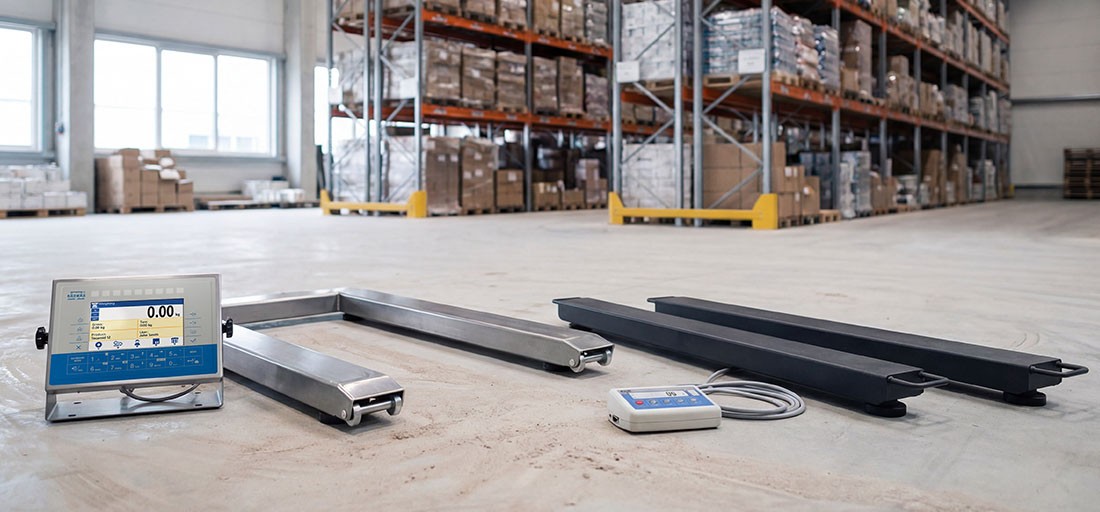
2. High IP class weighing platforms

RADWAG offers weighing platforms with a protection rating of up to IP68, designed for use in humid, dusty or aggressive environments. Their advantages include:

·        Fully sealed construction

·        Resistance to pressure washing

·        High mechanical durability

·        Ability to operate in the food and chemical industries.

3. Complete weighing sets

The combination of a weighing terminal with a suitably selected platform allows you to create a weighing system perfectly suited to a specific application – from simple weighing to advanced process control.

Summary

Selecting a scale for use in harsh industrial environments requires consideration of many factors: environmental, technical and formal. Vibrations, humidity or dust do not have to adversely affect measurement accuracy. RADWAG solutions, such as weighing terminals or platforms with a high IP protection rating, have been designed for reliable operation where standard scales fail.

Newsletter

Subscribe to the newsletter if you would like to receive RADWAG news.

View more
Is Mass a Constant? Factors Affecting the Measurement Result
2026-07-28

Is Mass a Constant? Factors Affecting the Measurement Result

At first glance, the answer seems obvious. If an object has a mass of 100 grams, it should always weigh 100 grams. However, in metrological practice, the situation is much more complex.
More  ➜
Electrostatics – the Silent Precision Killer
2026-07-14

Electrostatics – the Silent Precision Killer

On the one hand, accurate balance, controlled conditions and an experienced operator; on the other, inconsistent results. One of the most commonly overlooked culprits is electrostatic charge – a phenomenon which is exceptionally effective at interfering with mass measurements.
More  ➜
Analytical vs. Precision Balances – When Are You Paying too Much, and When Are You Taking a Risk?
2026-06-30

Analytical vs. Precision Balances – When Are You Paying too Much, and When Are You Taking a Risk?

Choosing the right laboratory balance often seems straightforward – until the moment you have to make a purchase decision.
More  ➜
How Often Should a Balance Be Calibrated in a Lab Environment?
2026-06-17

How Often Should a Balance Be Calibrated in a Lab Environment?

Calibrating a laboratory balance is essential for obtaining reliable measurement results. Find out how often it should be done and in which situations it is absolutely essential.
More  ➜
What Is ‘Calibration’ and How Does It Differ From Adjustment?
2026-05-26

What Is ‘Calibration’ and How Does It Differ From Adjustment?

‘Calibration’ is a term historically associated with the balance adjustment process. Adjustment, on the other hand, is a set of activities through which a measuring instrument is made to operate in accordance with its intended use.
More  ➜
Effective Laboratory Management. How Does Process Automation Improve Efficiency?
2026-05-12

Effective Laboratory Management. How Does Process Automation Improve Efficiency?

The growing number of tests, the need to maintain the highest quality of results, and the limited availability of qualified staff mean that laboratory management today requires not only organisational skills but also the informed use of modern technologies.
More  ➜
Moisture Analyzer as a Quality Control Tool in Plastics Production – Accuracy and Effectiveness of RADWAG Technology
2026-04-28

Moisture Analyzer as a Quality Control Tool in Plastics Production – Accuracy and Effectiveness of RADWAG Technology

In modern plastics production, precise control of granule moisture content determines the stability of the technological process, the strength of parts and the minimisation of material losses. Read how RADWAG’s technological solutions allow your company to achieve full repeatability and process safety.
More  ➜
How Much Does a Lab Technician’s Time Cost You? The Hidden Costs of Manual Calibration
2026-04-14

How Much Does a Lab Technician’s Time Cost You? The Hidden Costs of Manual Calibration

Although manual pipette calibration is still widely used, it significantly increases working time and generates hidden costs which often go unnoticed in day-to-day laboratory operations. Fortunately, there are modern solutions available which can boost laboratory productivity.
More  ➜
Pallet Scale vs. Beam Scale – a Complete Guide to Industrial Scales
2026-03-31

Pallet Scale vs. Beam Scale – a Complete Guide to Industrial Scales

How does a U-type pallet scale differ from a beam scale? Are beam scales suitable for weighing machines and tanks? Why is it worth buying a pallet scale directly from the manufacturer? You will find answers to these and other questions in this article.
More  ➜
What Does ‘Precision Balances’ Mean?
2026-03-17

What Does ‘Precision Balances’ Mean?

Are precision balances inherently more precise than other balances? After all, the range of electronic balances includes laboratory balances, which are even more accurate, so where does this name come from?
More  ➜
Professional Weighing Workstations, Antivibration Tables and Weighing Tables by RADWAG – Elimination of Vibrations in the Laboratory
2026-03-03

Professional Weighing Workstations, Antivibration Tables and Weighing Tables by RADWAG – Elimination of Vibrations in the Laboratory

A weighing table is designed to eliminate ground vibrations which interfere with the operation of laboratory equipment, especially balances. Which balances and scales should weighing tables be used with? What is the difference between a weighing table, an antivibration table and a weighing workstation? You will find answers to all your questions in this article.
More  ➜
Balance as a Quality Guardian. Net Weight Control in Small-Scale Food Production
2026-02-03

Balance as a Quality Guardian. Net Weight Control in Small-Scale Food Production

The net weight declared on the label is a promise to the customer – information about how much product is actually in the package. In the food industry, keeping this promise is the foundation of credibility.
More  ➜
« Back

© 2026 RADWAG Balances and Scales.

All rights reserved.