Radwag Balances and Scales - Advanced Weighing Technologies
2023-03-31

‘Checking and Calibration of Fixed and Variable Volume Piston Pipettes Using a Gravimetric Method.’ What is the Publication of Slawomir Janas, PhD, about?

‘Checking and Calibration of Fixed and Variable Volume Piston Pipettes Using a Gravimetric Method.’ What is the Publication of Slawomir Janas, PhD, about?
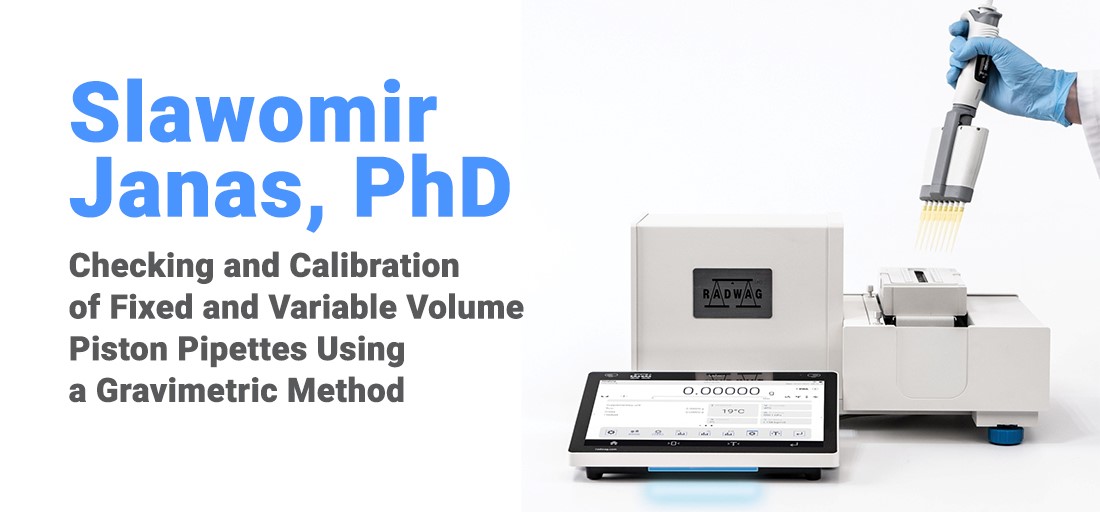
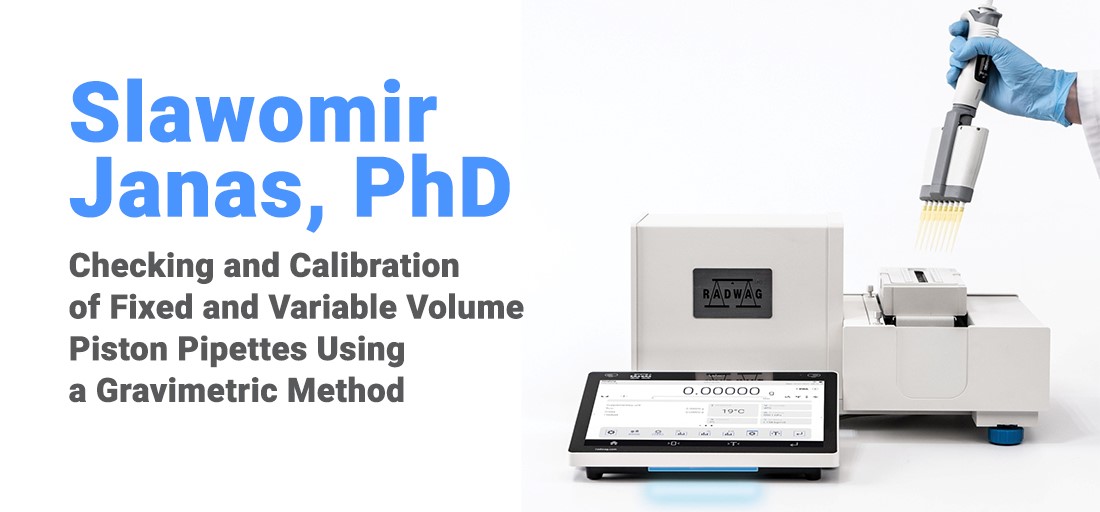
Liquids are a popular subject of scientific and laboratory research. Fluid volume plays a key role in the accuracy of the analysis performed. Initially, pipettes were used to transfer volumes, through which the researcher drew a certain amount of substance by mouth. Because over time this method was considered dangerous to health and life, pipetting by mouth was banned in some countries. It was replaced by mechanical or electronic instruments, such as pipettes, burettes and dilutors, which permanently eliminated the risks associated with the absorption of harmful agents by the researcher.

It is pipettes, specifically piston pipettes, that have become the subject of interest to the author of the publication entitled ‘Checking and Calibration of Fixed and Variable Volume Piston Pipettes Using a Gravimetric Method’ by Slawomir Janas, PhD.

How Does a Piston Pipette Work and What Are the Types of Piston Pipettes?
‘Checking and Calibration of Fixed and Variable Volume Piston Pipettes Using a Gravimetric Method.’ What is the Publication of Slawomir Janas, PhD, about?

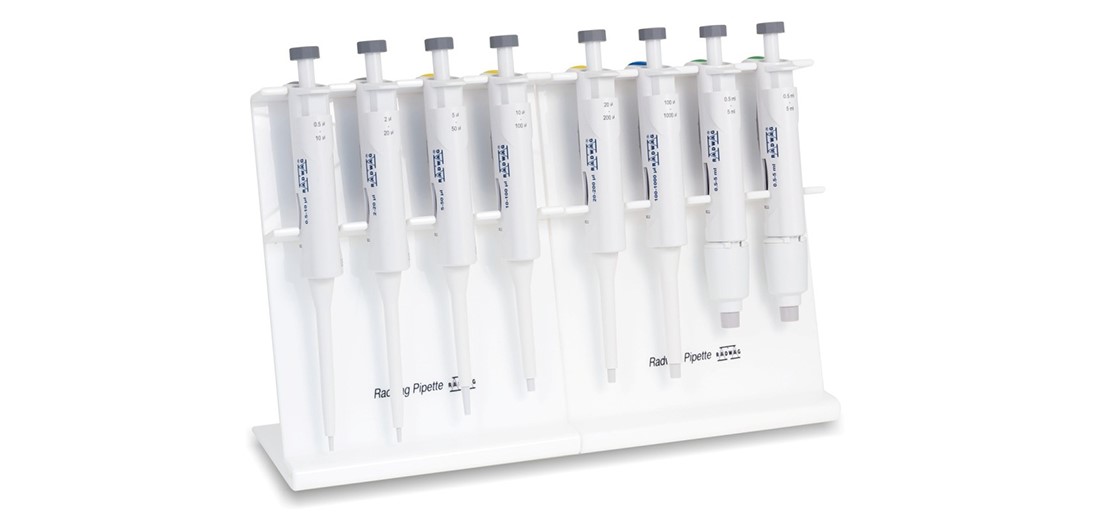
At the beginning of his paper, the author describes the mechanism of the piston pipette: pressure (manual or automatic) on the plunger pushes the liquid out of the pipette opening for dispensing. He then lists the types of piston pipettes. The criteria for dividing these instruments are several. The researcher distinguishes between, first, fixed-volume and variable-volume pipettes. Fixed-volume pipettes allow dispensing only a certain dose of liquid without adjusting the amount, while variable-volume pipettes allow adjusting the dispensed volume within the range provided by the manufacturer. 

Another division of pipettes is based on the way the liquid is drawn into the pipette (type A and type D pipette). It is possible to aspirate a dose of liquid so that the liquid is separated from the pipette piston by a so-called air cushion, the volume of which can be called the pipette's air dead zone (type A pipette). In the pipette of the second type, the aspirated liquid is in direct contact with the pipette piston, which reduces the problem of inaccuracy resulting from the existence of the air cushion (type D pipette).

In addition, there are single-channel and multi-channel pipettes, as well as manually operated pipettes and semi-automatic electronically controlled pipettes.

What is the Gravimetric Method of Checking and Calibrating Piston Pipettes?
‘Checking and Calibration of Fixed and Variable Volume Piston Pipettes Using a Gravimetric Method.’ What is the Publication of Slawomir Janas, PhD, about?

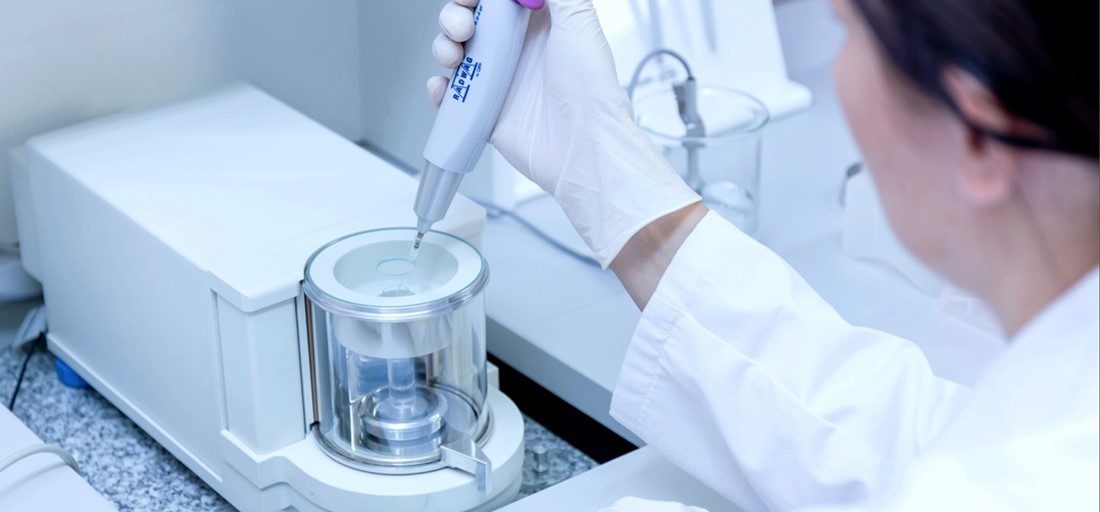
In this process, the gravimetric method is used to record the mass of expelled liquid, which requires converting the weighing results into volume. For this purpose, one of two methods must be chosen. The first method is based on a general formula to calculate the volume of the liquid, taking into account such factors as the effect of evaporation of the liquid in the cycle, the density of atmospheric air, the density of the mass standard, the density of water, the coefficient of thermal expansion of the pipette, and the temperature of the test.   

The second method is simpler, as all these factors are taken into account in the so-called Z-correction factor. The conversion of liquid mass to volume involves using the appropriate value of the index at which the test is conducted (this value already takes into account the density of water, atmospheric pressure and temperature).

All the formulas and values mentioned here are included in the publication by Slawomir Janas, PhD, titled ‘Checking and Calibration of Fixed and Variable Volume Piston Pipettes Using a Gravimetric Method.’

The topic raised in the publication concerns such RADWAG products as:

We encourage you to read it.

If you have questions related to piston pipettes, the gravimetric method and the publication itself, do not hesitate – write to us!

‘Checking and Calibration of Fixed and Variable Volume Piston Pipettes Using a Gravimetric Method.’ What is the Publication of Slawomir Janas, PhD, about?

Newsletter

Subscribe to the newsletter if you would like to receive RADWAG news.

View more
How Much Does a Lab Technician’s Time Cost You? The Hidden Costs of Manual Calibration
2026-04-14

How Much Does a Lab Technician’s Time Cost You? The Hidden Costs of Manual Calibration

Although manual pipette calibration is still widely used, it significantly increases working time and generates hidden costs which often go unnoticed in day-to-day laboratory operations. Fortunately, there are modern solutions available which can boost laboratory productivity.
More  ➜
Pallet Scale vs. Beam Scale – a Complete Guide to Industrial Scales
2026-03-31

Pallet Scale vs. Beam Scale – a Complete Guide to Industrial Scales

How does a U-type pallet scale differ from a beam scale? Are beam scales suitable for weighing machines and tanks? Why is it worth buying a pallet scale directly from the manufacturer? You will find answers to these and other questions in this article.
More  ➜
What Does ‘Precision Balances’ Mean?
2026-03-17

What Does ‘Precision Balances’ Mean?

Are precision balances inherently more precise than other balances? After all, the range of electronic balances includes laboratory balances, which are even more accurate, so where does this name come from?
More  ➜
Professional Weighing Workstations, Antivibration Tables and Weighing Tables by RADWAG – Elimination of Vibrations in the Laboratory
2026-03-03

Professional Weighing Workstations, Antivibration Tables and Weighing Tables by RADWAG – Elimination of Vibrations in the Laboratory

A weighing table is designed to eliminate ground vibrations which interfere with the operation of laboratory equipment, especially balances. Which balances and scales should weighing tables be used with? What is the difference between a weighing table, an antivibration table and a weighing workstation? You will find answers to all your questions in this article.
More  ➜
How to Choose a Scale for Use in Harsh Industrial Environments?
2026-02-17

How to Choose a Scale for Use in Harsh Industrial Environments?

In many industries, precise mass measurement must be performed in conditions far from laboratory conditions. Which RADWAG solutions have been designed specifically for such applications?
More  ➜
Balance as a Quality Guardian. Net Weight Control in Small-Scale Food Production
2026-02-03

Balance as a Quality Guardian. Net Weight Control in Small-Scale Food Production

The net weight declared on the label is a promise to the customer – information about how much product is actually in the package. In the food industry, keeping this promise is the foundation of credibility.
More  ➜
How to Teach Accurate Weighing? Analytical and Precision Balances in University Laboratories
2026-01-20

How to Teach Accurate Weighing? Analytical and Precision Balances in University Laboratories

At RADWAG, we have been observing for years how important our devices are in educating future generations of specialists. In this article, we suggest how to effectively teach weighing and select the optimal balance for a teaching laboratory.
More  ➜
Summary of 2025
2026-01-07

Summary of 2025

The 40th anniversary of the company, victory in a prestigious industry competition, new products – read about what RADWAG has been up to over the past year.
More  ➜
Best Wishes for Christmas and New Year
2025-12-23

Best Wishes for Christmas and New Year

Merry Christmas and a happy New Year to all RADWAG employees, partners and friends.
More  ➜
How To Choose a Weighing Device for Checking Raw Materials in the Cosmetics Industry?
2025-12-09

How To Choose a Weighing Device for Checking Raw Materials in the Cosmetics Industry?

In the cosmetics industry, precise weighing of ingredients determines the quality and safety of products, which is why choosing the right balance or scale for the laboratory and quality control department is half the battle.
More  ➜
Choosing a RADWAG Moisture Analyzer – Which One Will Work Best in Your Laboratory?
2025-11-25

Choosing a RADWAG Moisture Analyzer – Which One Will Work Best in Your Laboratory?

A moisture analyzer is an essential device in many laboratories, as it allows you to quickly and accurately determine the moisture content of samples. MA X7.A, PMV 5Y, MA 5Y or MA R – which RADWAG moisture analyzer should you choose and why?
More  ➜
Modern Labs Learn to Weigh Accurately – the Role of RADWAG Balances in Education and Science
2025-11-12

Modern Labs Learn to Weigh Accurately – the Role of RADWAG Balances in Education and Science

Precision is not only the domain of industry – it is also the foundation of science. RADWAG, as one of the world’s leading manufacturers of balances, provides solutions which support the teaching process and develop the skills of future specialists.
More  ➜
What Is the Deal with Measurement Speed? Facts, Myths and Our Approach at RADWAG
2025-10-28

What Is the Deal with Measurement Speed? Facts, Myths and Our Approach at RADWAG

We often hear the question: ‘Which balance is the fastest?’ But does ‘speed’ always go hand in hand with readability? And is it worth trusting the results which appear on the display after a fraction of a second? The answer, as is usually the case, is: it depends.
More  ➜
« Back

© 2026 RADWAG Balances and Scales.

All rights reserved.