Radwag Balances and Scales - Advanced Weighing Technologies
2023-07-13

Another PhD in RADWAG’s R&D Department!

Another PhD in RADWAG’s R&D Department!

Another PhD in RADWAG’s R&D Department!


Michal Solecki, Technical Mass Comparators Manager at RADWAG, has just defended – with distinction! – his PhD thesis in mechanical engineering at Kazimierz Pulaski University of Technology and Humanities in Radom. We are very proud of him, so we decided to ask him about his success story.


RADWAG: – We were able to establish some details about you. We know that you have been working at RADWAG for twelve years. At first you were a constructor, then you headed the mass comparator department, and now you hold the position of technical mass comparators manager. Have we left anything out? Could you complete this information?


Michal Solecki: – I started my adventure at RADWAG twelve years ago, when I applied for the job of constructor. After two years of work, I was offered the position of manager of the mass comparator department. I accepted it because I wanted to focus on this narrow field of these interesting devices. In 2017, I became technical mass comparators manager and I continue to be so. I’m involved in the design and implementation of new systems for mass comparators, including automatic comparators, robotic comparators and a vacuum comparator that works at the Central Office of Measures in Warsaw.


R.: – Information about your scientific success has reached us – you have defended your PhD thesis, and with distinction! Congratulations. Could you tell us more details? What prompted you to take on such a challenge?


M.S.: – The main factor was my own ambition – something was missing after my studies at Kazimierz Pulaski University of Technology and Humanities in Radom and I knew I could afford to do more. In addition, when I started working at RADWAG, I noticed that there is a huge scientific potential in what we do, and it was a pity not to take advantage of it.


R.: – So the topic of your thesis was closely related to your position at RADWAG?


M.S.: – Yes. As I mentioned, the scientific potential in what we do is enormous, and PhD theses or scientific articles can be edited a lot.


R.: – Did the fact that you are writing about the device you work on every day make your task easier, or was it more of a challenge? Can you tell us more about the NANO.AK-4.500.5Y automatic nano-mass comparator? What makes it different? What possibilities does it offer?


M.S.: – Definitely yes – it is much easier to write about something that a person deals with on a daily basis. The device I created and tested was not in the company’s development plans. However, when it was created, and studies of metrological parameters showed that its repeatability was impressive, the management decided to put it into production, which made me very happy. The device itself, the new NANO.AK-4.500.5Y comparator, is used for the calibration of mass standards mainly in micrograms, but not only, as its comparative range is in the range of 0.05-500 mg. I am proud to report that it is the first comparator in the world to have a resolution of 10 ng.


R.: – Where can your PhD thesis be read?


M.S.: – It is available on the website of Kazimierz Pulaski University of Technology and Humanities in Radom.


R.: – What will change in your career after such an achievement?


M.S.: – I think it will be much easier for me to establish contacts with national metrology institutes, such as CMI, NPL, NIST, etc. We are already cooperating with them, but I think that in the near future our cooperation will expand to new scientific challenges. In addition, thanks to my doctoral studies, my knowledge of test preparation for new devices that we develop in our company on a daily basis has deepened. It is possible that I will use this knowledge in the future.


R.: – What are your next academic goals and upcoming career plans?


M.S.: – My scientific goals and upcoming professional plans are interrelated, because as a technical mass comparators manager, I am involved in many interesting projects. They are confidential, but I can reveal that at the moment we are working on a hybrid of a robotic and automatic mass comparator, which combines the advantages of both and thus allows to achieve several times better repeatability than the results obtained so far on robotic mass comparators from other manufacturers.


R.: – Thank you for the interview and congratulations once again on such an accomplishment. We wish you further success.


M.S.: – Thank you very much. I would also like to thank RADWAG very much, and especially Mr. Witold Lewandowski, PhD, the company’s Owner and Founder, without whom I certainly would not have achieved this. 


You can also find information about our colleague’s success on RADWAG’s website.

Newsletter

Subscribe to the newsletter if you would like to receive RADWAG news.

View more
RADWAG Metrology Symposium
2026-10-20
4 min read

RADWAG Metrology Symposium

The fourth edition of this event took place from 6 to 8 October.
More  ➜
Why Do Laboratories Weigh… Air? The Impact of the Environment on Measurement Results
2026-10-06
4 min read

Why Do Laboratories Weigh… Air? The Impact of the Environment on Measurement Results

In a laboratory, the weighing result depends not only on the sample and the balance’s specifications. Environmental conditions also play a role: temperature, pressure, humidity and even CO₂ concentration.
More  ➜
The World’s Most Expensive Gram. Where Does Weighing Accuracy Determine Losses Running Into Millions?
2026-09-22
7 min read

The World’s Most Expensive Gram. Where Does Weighing Accuracy Determine Losses Running Into Millions?

Pharmaceuticals, semiconductors, precious metals and aviation – in these industries, a single gram can be worth far more than its mass would suggest.
More  ➜
Polish Quality on a Global Scale. Discover RADWAG
2026-09-09
2 min read

Polish Quality on a Global Scale. Discover RADWAG

Hundreds of carefully considered decisions, in-house production and attention to detail – discover what lies behind the quality of our products.
More  ➜
Is It Possible to Weigh Something You Cannot Touch? On the Unusual Uses of Laboratory Balances
2026-08-25
5 min read

Is It Possible to Weigh Something You Cannot Touch? On the Unusual Uses of Laboratory Balances

When we think of weighing, we usually picture a simple process: we place an object on a weighing pan and read its mass. In reality, modern metrology goes far beyond this scenario.
More  ➜
The Use of Analytical Balances. Why Is Measurement Accuracy so Important?
2026-08-11
4 min read

The Use of Analytical Balances. Why Is Measurement Accuracy so Important?

In laboratories, every fraction of a gram can affect the final test result. That is why analytical balances are among the most important measuring instruments used in research, industrial, pharmaceutical and university laboratories.
More  ➜
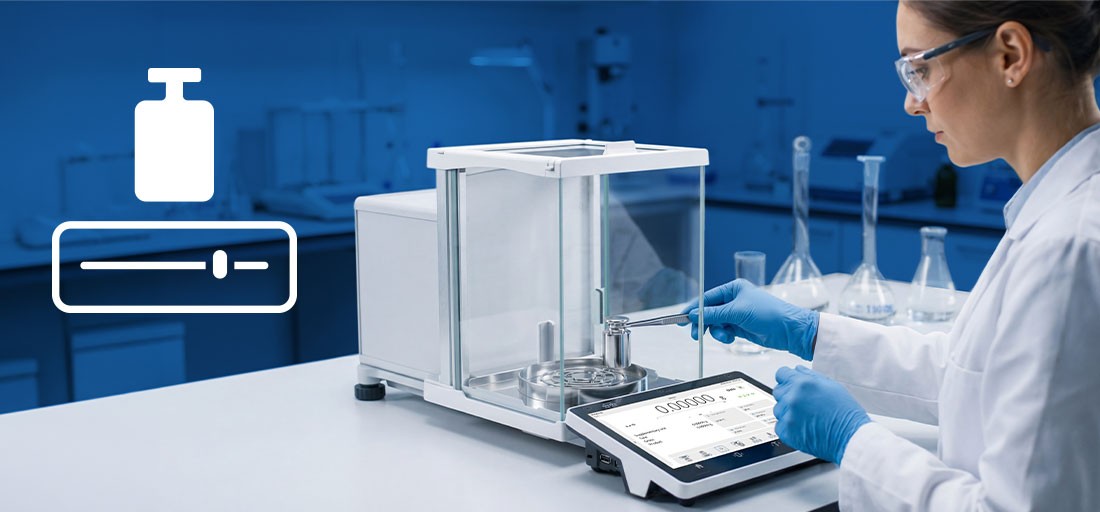
Is Mass a Constant? Factors Affecting the Measurement Result
2026-07-28
4 min read

Is Mass a Constant? Factors Affecting the Measurement Result

At first glance, the answer seems obvious. If an object has a mass of 100 grams, it should always weigh 100 grams. However, in metrological practice, the situation is much more complex.
More  ➜
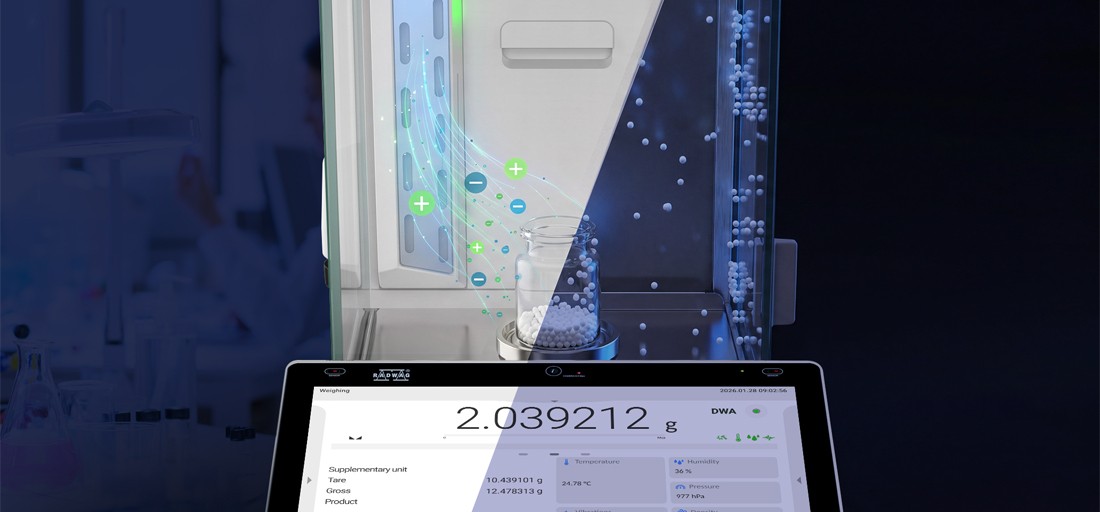
Electrostatics – the Silent Precision Killer
2026-07-14
4 min read

Electrostatics – the Silent Precision Killer

On the one hand, accurate balance, controlled conditions and an experienced operator; on the other, inconsistent results. One of the most commonly overlooked culprits is electrostatic charge – a phenomenon which is exceptionally effective at interfering with mass measurements.
More  ➜
Analytical vs. Precision Balances – When Are You Paying too Much, and When Are You Taking a Risk?
2026-06-30
5 min read

Analytical vs. Precision Balances – When Are You Paying too Much, and When Are You Taking a Risk?

Choosing the right laboratory balance often seems straightforward – until the moment you have to make a purchase decision.
More  ➜
How Often Should a Balance Be Calibrated in a Lab Environment?
2026-06-17
1 min read

How Often Should a Balance Be Calibrated in a Lab Environment?

Calibrating a laboratory balance is essential for obtaining reliable measurement results. Find out how often it should be done and in which situations it is absolutely essential.
More  ➜
What Is ‘Calibration’ and How Does It Differ From Adjustment?
2026-05-26
3 min read

What Is ‘Calibration’ and How Does It Differ From Adjustment?

‘Calibration’ is a term historically associated with the balance adjustment process. Adjustment, on the other hand, is a set of activities through which a measuring instrument is made to operate in accordance with its intended use.
More  ➜
Effective Laboratory Management. How Does Process Automation Improve Efficiency?
2026-05-12
5 min read

Effective Laboratory Management. How Does Process Automation Improve Efficiency?

The growing number of tests, the need to maintain the highest quality of results, and the limited availability of qualified staff mean that laboratory management today requires not only organisational skills but also the informed use of modern technologies.
More  ➜
Moisture Analyzer as a Quality Control Tool in Plastics Production – Accuracy and Effectiveness of RADWAG Technology
2026-04-28
3 min read

Moisture Analyzer as a Quality Control Tool in Plastics Production – Accuracy and Effectiveness of RADWAG Technology

In modern plastics production, precise control of granule moisture content determines the stability of the technological process, the strength of parts and the minimisation of material losses. Read how RADWAG’s technological solutions allow your company to achieve full repeatability and process safety.
More  ➜
« Back

© 2026 RADWAG Balances and Scales.

All rights reserved.