Radwag Balances and Scales - Advanced Weighing Technologies
2024-12-31

Metrology of Mass and Water Content Measurements in the Cosmetics Industry

Metrology of Mass and Water Content Measurements in the Cosmetics Industry
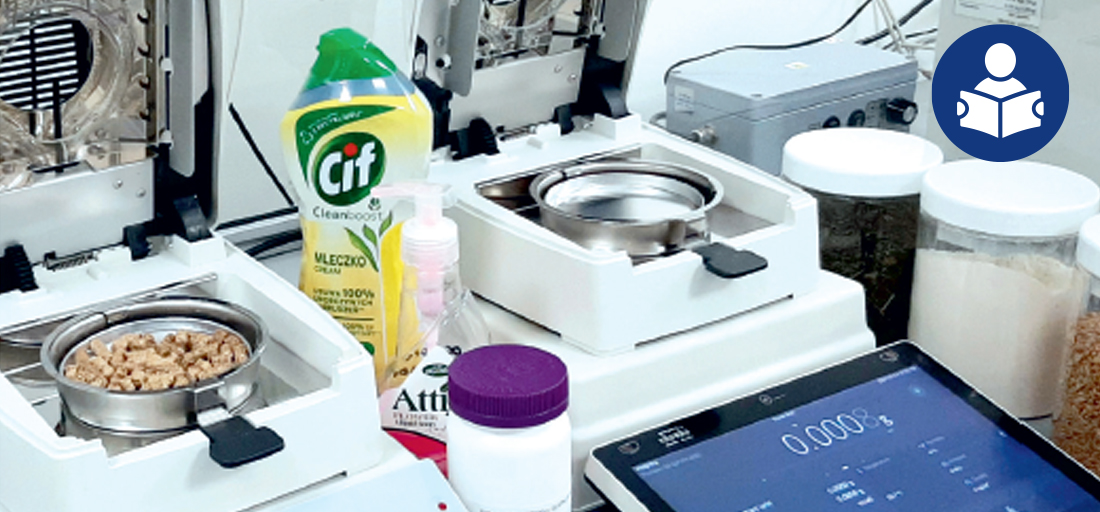
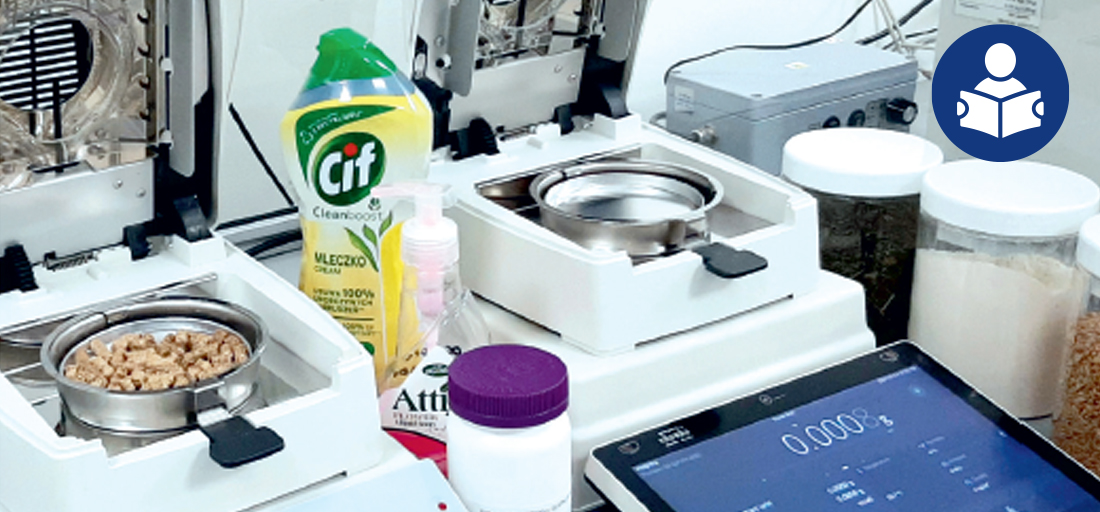
We encourage you to read an article by our experts representing the RADWAG Research and Certification Metrology Centre, Sławomir Janas, PhD, and Martyna Roszowska-Jarosz, PhD.

The quality of every product, including cosmetics, is the sum of many physical and chemical processes. As a result of these, a product is created from a mixture of ingredients, the characteristics of which are in accordance with the original assumptions. Achieving quality at a satisfactory level is not easy, especially when customer requirements and economic realities have to be taken into account. Economic and market success is usually the result of knowledge skilfully applied in the production process. The production of products in a high-volume system requires the continuous measurement of important product or process quality parameters. The method of measurement is defined by the measurement methodology and the interpretation of the results in terms of tolerances and errors draws from metrology.

Measuring product mass, its volume, average quantity and other physico-chemical parameters is also necessary as a defining element of production stability and for confirming product compliance with internal or normative requirements. The above relationships apply to many quality parameters of cosmetic products, including the measurement of mass or dry matter content.

It seems easy to make measurements, but the stability of the weighing system and the test method used determine the accuracy of the analysis. Currently, measurements can be performed with nanogram resolution in manual and automatic cycles, which is an additional complication.

Most production and control processes operate according to quality management systems. Unfortunately, normative acts do not provide ready-made solutions on how to achieve measurement accuracy, but only describe the requirements in general terms.

For more information on the metrology of mass and water content measurements in the cosmetics industry, see the article by RADWAG’s Research and Certification Metrology Centre employees, Slawomir Janas, PhD, and Martyna Roszowska-Jarosz, PhD. We encourage you to read.

Newsletter

Subscribe to the newsletter if you would like to receive RADWAG news.

View more
Effective Laboratory Management. How Does Process Automation Improve Efficiency?
2026-05-12

Effective Laboratory Management. How Does Process Automation Improve Efficiency?

The growing number of tests, the need to maintain the highest quality of results, and the limited availability of qualified staff mean that laboratory management today requires not only organisational skills but also the informed use of modern technologies.
More  ➜
Moisture Analyzer as a Quality Control Tool in Plastics Production – Accuracy and Effectiveness of RADWAG Technology
2026-04-28

Moisture Analyzer as a Quality Control Tool in Plastics Production – Accuracy and Effectiveness of RADWAG Technology

In modern plastics production, precise control of granule moisture content determines the stability of the technological process, the strength of parts and the minimisation of material losses. Read how RADWAG’s technological solutions allow your company to achieve full repeatability and process safety.
More  ➜
How Much Does a Lab Technician’s Time Cost You? The Hidden Costs of Manual Calibration
2026-04-14

How Much Does a Lab Technician’s Time Cost You? The Hidden Costs of Manual Calibration

Although manual pipette calibration is still widely used, it significantly increases working time and generates hidden costs which often go unnoticed in day-to-day laboratory operations. Fortunately, there are modern solutions available which can boost laboratory productivity.
More  ➜
Pallet Scale vs. Beam Scale – a Complete Guide to Industrial Scales
2026-03-31

Pallet Scale vs. Beam Scale – a Complete Guide to Industrial Scales

How does a U-type pallet scale differ from a beam scale? Are beam scales suitable for weighing machines and tanks? Why is it worth buying a pallet scale directly from the manufacturer? You will find answers to these and other questions in this article.
More  ➜
What Does ‘Precision Balances’ Mean?
2026-03-17

What Does ‘Precision Balances’ Mean?

Are precision balances inherently more precise than other balances? After all, the range of electronic balances includes laboratory balances, which are even more accurate, so where does this name come from?
More  ➜
Professional Weighing Workstations, Antivibration Tables and Weighing Tables by RADWAG – Elimination of Vibrations in the Laboratory
2026-03-03

Professional Weighing Workstations, Antivibration Tables and Weighing Tables by RADWAG – Elimination of Vibrations in the Laboratory

A weighing table is designed to eliminate ground vibrations which interfere with the operation of laboratory equipment, especially balances. Which balances and scales should weighing tables be used with? What is the difference between a weighing table, an antivibration table and a weighing workstation? You will find answers to all your questions in this article.
More  ➜
How to Choose a Scale for Use in Harsh Industrial Environments?
2026-02-17

How to Choose a Scale for Use in Harsh Industrial Environments?

In many industries, precise mass measurement must be performed in conditions far from laboratory conditions. Which RADWAG solutions have been designed specifically for such applications?
More  ➜
Balance as a Quality Guardian. Net Weight Control in Small-Scale Food Production
2026-02-03

Balance as a Quality Guardian. Net Weight Control in Small-Scale Food Production

The net weight declared on the label is a promise to the customer – information about how much product is actually in the package. In the food industry, keeping this promise is the foundation of credibility.
More  ➜
How to Teach Accurate Weighing? Analytical and Precision Balances in University Laboratories
2026-01-20

How to Teach Accurate Weighing? Analytical and Precision Balances in University Laboratories

At RADWAG, we have been observing for years how important our devices are in educating future generations of specialists. In this article, we suggest how to effectively teach weighing and select the optimal balance for a teaching laboratory.
More  ➜
Summary of 2025
2026-01-07

Summary of 2025

The 40th anniversary of the company, victory in a prestigious industry competition, new products – read about what RADWAG has been up to over the past year.
More  ➜
Best Wishes for Christmas and New Year
2025-12-23

Best Wishes for Christmas and New Year

Merry Christmas and a happy New Year to all RADWAG employees, partners and friends.
More  ➜
How To Choose a Weighing Device for Checking Raw Materials in the Cosmetics Industry?
2025-12-09

How To Choose a Weighing Device for Checking Raw Materials in the Cosmetics Industry?

In the cosmetics industry, precise weighing of ingredients determines the quality and safety of products, which is why choosing the right balance or scale for the laboratory and quality control department is half the battle.
More  ➜
Choosing a RADWAG Moisture Analyzer – Which One Will Work Best in Your Laboratory?
2025-11-25

Choosing a RADWAG Moisture Analyzer – Which One Will Work Best in Your Laboratory?

A moisture analyzer is an essential device in many laboratories, as it allows you to quickly and accurately determine the moisture content of samples. MA X7.A, PMV 5Y, MA 5Y or MA R – which RADWAG moisture analyzer should you choose and why?
More  ➜
« Back

© 2026 RADWAG Balances and Scales.

All rights reserved.