Radwag Balances and Scales - Advanced Weighing Technologies
2025-12-09

How To Choose a Weighing Device for Checking Raw Materials in the Cosmetics Industry?

How To Choose a Weighing Device for Checking Raw Materials in the Cosmetics Industry?

How To Choose a Weighing Device for Checking Raw Materials in the Cosmetics Industry?

In the cosmetics industry, ingredients such as active substances, emollients and pigments must be measured with the utmost precision to ensure product safety and effectiveness. That is why the right choice of balance or scale is one of the most important steps in organising a laboratory or quality control department in a cosmetics factory.

Why Is Weighing Accuracy so Important in Cosmetics Manufacturing?

Cosmetic formulations often contain ingredients with high concentrations and strong effects, such as acids, plant extracts, essential oils and colourants. A deviation of even a few milligrams can affect:

  • The consistency of the emulsion
  • The stability of the product
  • The fragrance, colour and skincare properties of the article
  • Compliance with the declared specifications and GMP standards.

Therefore, balances and scales with different accuracy classes are used in laboratory and production processes – from analytical balances to industrial platform scales, depending on the stage and type of material being weighed.

1. Selecting the right balance or scale for the process stage

In the formulation laboratory

This is where precise weighing of small quantities of substances is most often performed. The XA 5Y.A series Analytical Balances are ideal for this purpose, as they feature:

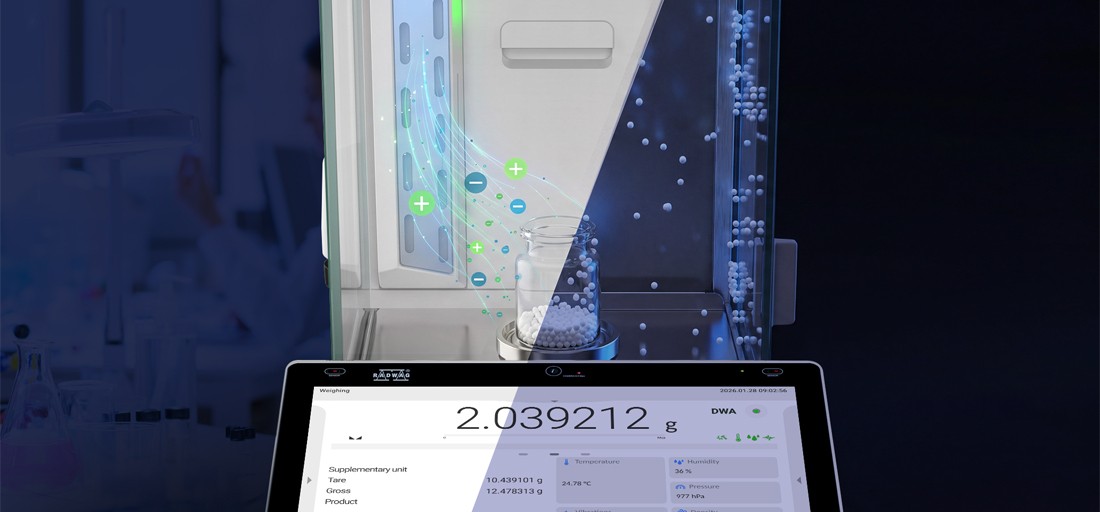
  • Integrated antistatic ioniser – neutralises electrostatic charges on weighed samples and accessories, eliminating the influence of electrical attraction or repulsion on the measurement result, thus increasing its repeatability and accuracy; this is extremely important for precise weighing of active ingredients in the formulation laboratory.
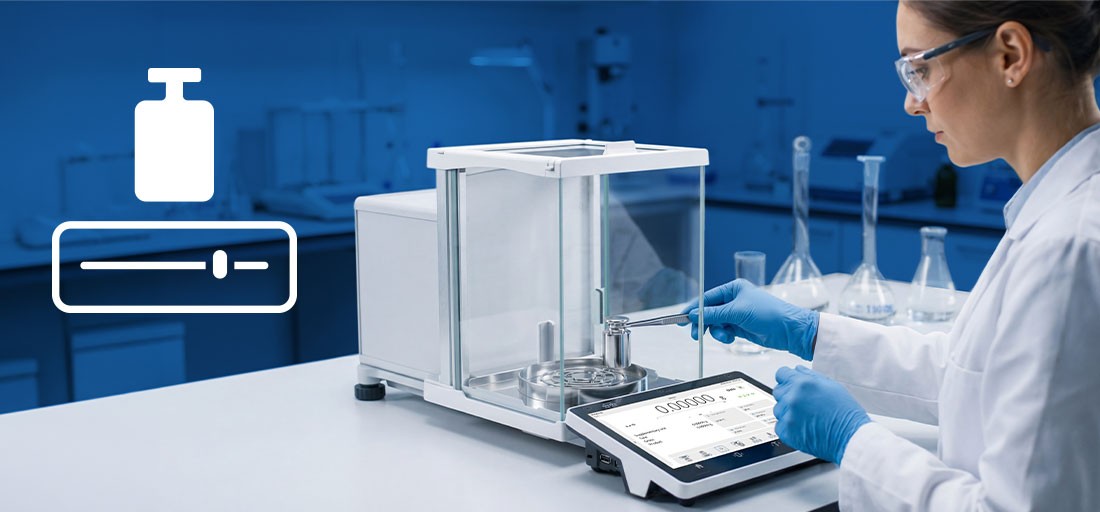
  • Automatic levelling (Reflex LEVEL System) – ensures that the balance is always in the optimal position without the need for manual levelling by the operator; this saves time, reduces setting errors and has a positive effect on measurement stability.
  • Automatically opened weighing chamber – enables fast, ergonomic and touch-free operation when introducing samples, which reduces disturbances caused by opening the door and contributes to more accurate results in the formulation laboratory.

In the quality control department

At this stage, batch compliance tests and sample checks are performed. Higher load capacity is required while maintaining good accuracy.

The 5Y.PM and PS.5Y series Precision Balances are ideal for this purpose, as they:

  • Enable results to be archived and data to be exported to a LIMS system
  • Allow user identification and documentation of the weighing process
  • Support work in accordance with GLP/GMP requirements, ensuring the reliability and repeatability of results.

In production areas

When preparing mixtures and semi-finished products, where larger quantities of raw materials are weighed, HY10 series Multifunctional Scales are essential, as their:

  • Housing with an increased protection class (IP66-IP69) protects against dust and moisture
  • Integration with the recipe system and operator terminals enables supervision of each stage of mixture preparation.

2. Hygiene and cleanliness – fundamental values in the cosmetics industry

All equipment which comes into contact with raw materials must meet strict hygiene requirements. That is why it is worth choosing balances and scales with:

  • Smooth, easy-to-clean surfaces made of stainless steel
  • A cleaning agent-resistant design
  • The possibility of dismantling the weighing pans and housing elements
  • A touch-free operation function (e.g. IR sensors) to maintain cleanliness and ergonomic working conditions.

3. Integration with quality systems

Modern cosmetics plants are increasingly implementing full digitisation of raw material control. RADWAG scales can work with the following systems:

  • E2R Recipes for recipe management and raw material control
  • R-Lab and R-Panel for collecting and visualising data from scales
  • LIMS/ERP for integration via Ethernet, Wi-Fi®, USB or RS232.

Such solutions allow for automatic documentation of the weighing process, elimination of human error and maintenance of a full audit trail, which is indispensable in an industry covered by GMP and ISO 22716 standards.

4. Stable working environment – a prerequisite for accurate measurement

It is worth remembering that weighing accuracy is affected by environmental factors:

  • Temperature and draughts
  • Humidity
  • Vibrations at the workstation
  • Electrostatic charges.

That is why laboratory and industrial antivibration tables are used in cosmetics laboratories and production halls to reduce the impact of vibrations and ensure repeatability of measurements.

Summary

Choosing the right balance or scale for raw material control in the cosmetics industry is an investment in quality, safety and process efficiency. It is worth matching the model to the stage of work – from microdosing in the laboratory to raw material control in production – and ensuring compliance with GMP requirements and integration with the quality management system. RADWAG offers a whole range of solutions for the cosmetics industry – from ultra-accurate analytical balances to robust industrial platforms which ensure repeatability and reliability of every measurement.

__________

Wi-Fi® is a registered trademark of Wi-Fi Alliance®.

Newsletter

Subscribe to the newsletter if you would like to receive RADWAG news.

View more
RADWAG Metrology Symposium
2026-10-20
4 min read

RADWAG Metrology Symposium

The fourth edition of this event took place from 6 to 8 October.
More  ➜
Why Do Laboratories Weigh… Air? The Impact of the Environment on Measurement Results
2026-10-06
4 min read

Why Do Laboratories Weigh… Air? The Impact of the Environment on Measurement Results

In a laboratory, the weighing result depends not only on the sample and the balance’s specifications. Environmental conditions also play a role: temperature, pressure, humidity and even CO₂ concentration.
More  ➜
The World’s Most Expensive Gram. Where Does Weighing Accuracy Determine Losses Running Into Millions?
2026-09-22
7 min read

The World’s Most Expensive Gram. Where Does Weighing Accuracy Determine Losses Running Into Millions?

Pharmaceuticals, semiconductors, precious metals and aviation – in these industries, a single gram can be worth far more than its mass would suggest.
More  ➜
Polish Quality on a Global Scale. Discover RADWAG
2026-09-09
2 min read

Polish Quality on a Global Scale. Discover RADWAG

Hundreds of carefully considered decisions, in-house production and attention to detail – discover what lies behind the quality of our products.
More  ➜
Is It Possible to Weigh Something You Cannot Touch? On the Unusual Uses of Laboratory Balances
2026-08-25
5 min read

Is It Possible to Weigh Something You Cannot Touch? On the Unusual Uses of Laboratory Balances

When we think of weighing, we usually picture a simple process: we place an object on a weighing pan and read its mass. In reality, modern metrology goes far beyond this scenario.
More  ➜
The Use of Analytical Balances. Why Is Measurement Accuracy so Important?
2026-08-11
4 min read

The Use of Analytical Balances. Why Is Measurement Accuracy so Important?

In laboratories, every fraction of a gram can affect the final test result. That is why analytical balances are among the most important measuring instruments used in research, industrial, pharmaceutical and university laboratories.
More  ➜
Is Mass a Constant? Factors Affecting the Measurement Result
2026-07-28
4 min read

Is Mass a Constant? Factors Affecting the Measurement Result

At first glance, the answer seems obvious. If an object has a mass of 100 grams, it should always weigh 100 grams. However, in metrological practice, the situation is much more complex.
More  ➜
Electrostatics – the Silent Precision Killer
2026-07-14
4 min read

Electrostatics – the Silent Precision Killer

On the one hand, accurate balance, controlled conditions and an experienced operator; on the other, inconsistent results. One of the most commonly overlooked culprits is electrostatic charge – a phenomenon which is exceptionally effective at interfering with mass measurements.
More  ➜
Analytical vs. Precision Balances – When Are You Paying too Much, and When Are You Taking a Risk?
2026-06-30
5 min read

Analytical vs. Precision Balances – When Are You Paying too Much, and When Are You Taking a Risk?

Choosing the right laboratory balance often seems straightforward – until the moment you have to make a purchase decision.
More  ➜
How Often Should a Balance Be Calibrated in a Lab Environment?
2026-06-17
1 min read

How Often Should a Balance Be Calibrated in a Lab Environment?

Calibrating a laboratory balance is essential for obtaining reliable measurement results. Find out how often it should be done and in which situations it is absolutely essential.
More  ➜
What Is ‘Calibration’ and How Does It Differ From Adjustment?
2026-05-26
3 min read

What Is ‘Calibration’ and How Does It Differ From Adjustment?

‘Calibration’ is a term historically associated with the balance adjustment process. Adjustment, on the other hand, is a set of activities through which a measuring instrument is made to operate in accordance with its intended use.
More  ➜
Effective Laboratory Management. How Does Process Automation Improve Efficiency?
2026-05-12
5 min read

Effective Laboratory Management. How Does Process Automation Improve Efficiency?

The growing number of tests, the need to maintain the highest quality of results, and the limited availability of qualified staff mean that laboratory management today requires not only organisational skills but also the informed use of modern technologies.
More  ➜
Moisture Analyzer as a Quality Control Tool in Plastics Production – Accuracy and Effectiveness of RADWAG Technology
2026-04-28
3 min read

Moisture Analyzer as a Quality Control Tool in Plastics Production – Accuracy and Effectiveness of RADWAG Technology

In modern plastics production, precise control of granule moisture content determines the stability of the technological process, the strength of parts and the minimisation of material losses. Read how RADWAG’s technological solutions allow your company to achieve full repeatability and process safety.
More  ➜
« Back

© 2026 RADWAG Balances and Scales.

All rights reserved.